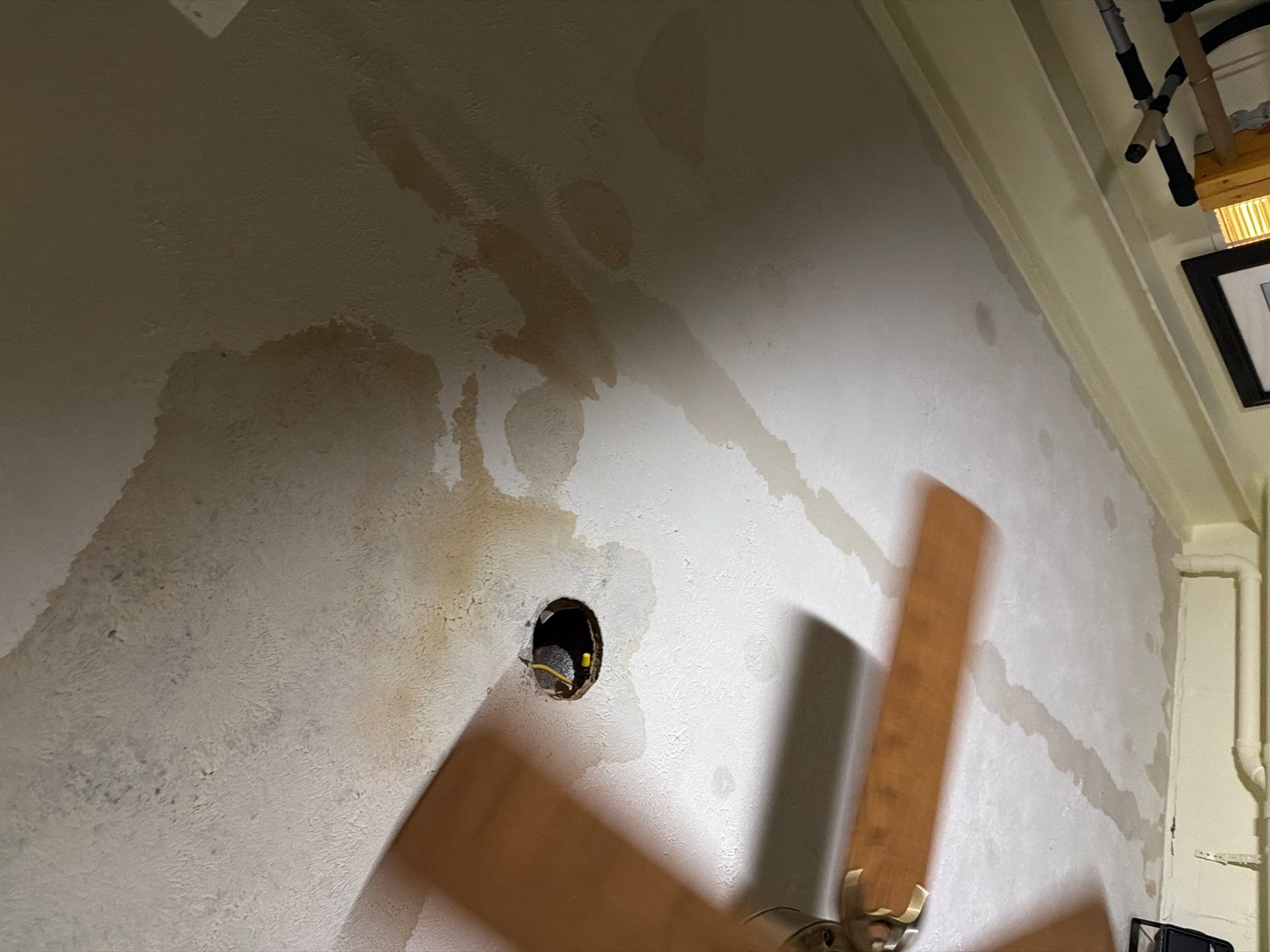
Problem: Water Is Still Flowing and You Do Not Know Where It Is Coming From
Most Spencer homeowners freeze at this exact moment. The instinct is to grab towels. The right move is to stop the supply. Until the source is off, every minute adds gallons, and gallons translate directly into ruined subfloor, swollen baseboards, and saturated insulation.
Solution: Kill the Water at the Closest Valve, Then the Main
Work outward from the leak. A toilet has a stop valve behind the bowl. A sink has two under the cabinet. A washing machine has hot and cold valves on the wall behind it. A dishwasher has a supply line that ties into the hot side under the kitchen sink. A refrigerator with an ice maker has a small saddle valve or quarter turn valve behind it or in the basement directly below. If you cannot identify the source in 60 seconds, go straight to the main shut off, usually in the basement near the front foundation wall or in a utility closet on a slab home. Turn it clockwise until it stops. If the handle is corroded or spins without engaging, call your municipal water department to shut the curb stop at the street. If you have a burst supply line, our guide on what to do when a pipe bursts in your home covers the exact sequence.
Solution: Identify the Source Before You Touch It
If the water came from a toilet supply line above the bowl, it is clean. If it came from below the bowl, the toilet itself, a floor drain, or a sewer line, treat it as contaminated and stay out of it. For a full breakdown of the differences, see our explainer on Category 1 vs Category 2 vs Category 3 water damage. When in doubt, call before you wade in.
Solution: Move, Lift, and Block Before You Mop
Do these three things in this order:
- Move furniture legs onto foil, plastic caps, or wood blocks so finish stain does not bleed into your floor.
- Lift rugs, electronics, and anything paper based off the wet surface and onto a dry counter or upper floor.
- Block the spread with rolled towels at doorways to dry rooms, especially carpeted bedrooms and closets.
Mopping comes after. A shop vacuum rated for liquids is far better than towels if you have one. Do not use a standard household vacuum, ever. If water has reached an electrical outlet, baseboard heater, or floor lamp cord, kill the breaker for that room before you step into the area. Wet shoes and live current are a combination that ends emergency calls early and in the worst way possible.
Solution: Photograph First, Then Mitigate
Spend five minutes with your phone. Get wide shots of every affected room, close ups of waterlines on walls, and pictures of any damaged contents with serial numbers visible. Note the time. Then call your insurer to open the claim number and call a restoration contractor to start mitigation. The two calls run in parallel, not in sequence. Save receipts for anything you buy during the first 24 hours, including tarps, fans you rent, and even a hotel room if your home is uninhabitable. Most policies reimburse reasonable emergency expenses under loss of use coverage, but only if you can prove what you spent.
What Adjusters Look for in Your Photos
Take pictures with a reference object in the frame when you can, like a tape measure against a waterline or a coin next to a damaged plank. Capture the contents of cabinets and closets that got wet, not just the rooms themselves. If you have a video function, walk slowly through each affected space narrating what you see and what time it is. That narration becomes a record an adjuster cannot dispute later.
Problem: You Are Not Sure If This Is Clean Water or Contaminated Water
The category of water dictates everything that follows: what can be dried in place, what has to be removed, and whether you need PPE just to walk through it. A supply line leak is Category 1. A dishwasher overflow that sat overnight may already be Category 2. A sewage backup is Category 3 and is not a DIY situation.
Solution: Get Professional Drying Started Within the First Day
The 48 hour mold window is real, and it is why professional water damage restoration exists. Spencer Water Restoration dispatches crews to Spencer in most cases within 2 hours of your call. We bring truck mounted extraction, air movers, and dehumidifiers sized for the space, and we measure moisture in materials, not just air. If we get there and decide your situation is small enough to handle yourself, we will tell you directly and walk you through it at no charge.
Problem: You Are Wondering How Long Until Things Get Worse
Mold growth begins on porous materials between 24 and 48 hours after saturation in typical indoor conditions. Drywall paper, carpet pad, and cabinet kicks are the first to colonize. The clock starts the moment water touches the material, not when you discover it.
The hour by hour progression is predictable. In the first hour you see surface spread and finish staining. Between one and 24 hours, drywall wicks moisture upward several inches and hardwood begins to cup. Between 24 and 48 hours, mold colonization begins on the porous materials that stayed wet. Past 48 hours, structural saturation sets in and demolition of affected materials becomes the only path forward. These ranges reflect typical Central Indiana indoor humidity and standard residential construction.
Problem: Standing Water Is Spreading Across Finished Floors
Hardwood cups within hours. Laminate swells and delaminates. Carpet pad wicks water sideways into rooms you have not even checked yet. Every minute the water sits, the damaged footprint grows.
Problem: You Need to File an Insurance Claim but You Have Not Documented Anything
Adjusters want photos taken before mitigation begins. If you tear out wet drywall before documenting, you can lose coverage on that material. At the same time, you cannot wait days for an adjuster while mold grows.