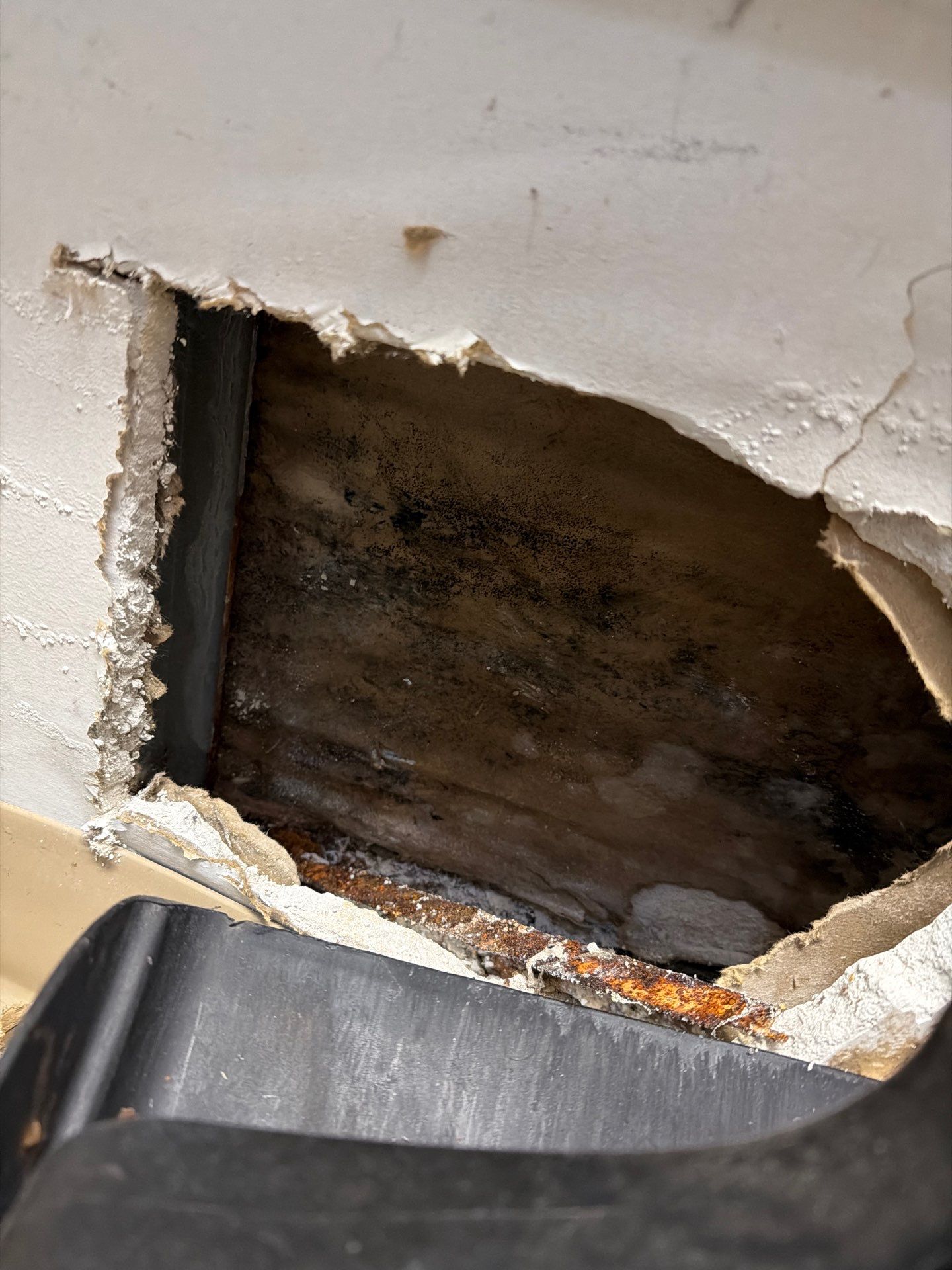
Problem: Standing Water Keeps Spreading Through Your Floors
You shut off the supply line, but the water already crossed two rooms and disappeared under the baseboards. Carpet pad is soaked. The hardwood seam in the hallway is darkening. A wet-vac and bath towels are not going to pull enough volume out fast enough, and every hour the water sits, it wicks further into materials that cost real money to replace.
Solution: Truck-Mounted Extraction Within the First Two Hours
Professional extraction is the single most important step in mitigation. Truck-mounted units pull water at a rate residential equipment cannot match, often 100+ gallons per hour from saturated carpet and subfloor. Our Spencer crews start with a moisture map of the affected area using infrared cameras and pin meters, then extract aggressively before any drying equipment goes down. This is the same sequence covered in our water extraction services guide, and it is the reason a Category 1 loss caught early often dries in three days instead of seven.
Speed matters because water follows gravity and capillary action at the same time. While it spreads horizontally across the floor, it is also climbing 8 to 12 inches up drywall and wicking into wood framing through end grain. Spencer Water Restoration dispatches with extraction equipment already loaded so the crew can start pulling water within minutes of walking through the door, not after a return trip to the warehouse.
Problem: The Surface Looks Dry but Walls and Framing Are Still Wet
You ran box fans for two days. The carpet feels dry to the touch. But there is a musty smell starting near the baseboard, and the drywall has a faint tide line you did not notice at first. Surface dryness is not structural dryness. Moisture trapped behind drywall, inside wall cavities, or in the subfloor can sit for weeks while mold colonies form in the dark.
Solution: Targeted Drying With Moisture Readings That Hit IICRC Standards
Real mitigation does not end when something feels dry. It ends when a moisture meter confirms the material is back to its dry standard, usually within 2 to 4 percentage points of an unaffected reference area. We use a combination of air movers (typically one per 10 to 16 linear feet of wet wall) and low-grain refrigerant dehumidifiers sized to the cubic footage of the affected space. For wall cavities, we drill small inspection holes behind the baseboard or use injection drying systems so we do not have to tear out drywall that is still salvageable.
Solution: Specialty Drying Mats and Controlled Dehumidification
For hardwood, we deploy floor drying mats that pull moisture directly from the boards through a vacuum seal, often saving floors that would otherwise be a total loss. The process takes 5 to 10 days with daily moisture checks on the wood, the subfloor, and the room ambient. For cabinets, we remove toe kicks, drill weep holes where they will not be visible, and direct air movers into the base cavity. Catching cupping in the first 48 hours gives the floor the best chance of returning to flat without sanding or replacement.
Solution: On-Site Categorization Before Any Drying Starts
Our techs categorize the loss before equipment goes down. Clean supply line break with no contact with building materials over 24 hours? Likely Category 1, full drying possible. Dishwasher discharge or a long-sitting Category 1 loss? Now it is Category 2, and porous materials like pad and insulation come out. Anything involving sewage falls under our sewage cleanup protocols and requires removal of affected porous materials, antimicrobial treatment, and clearance testing. We document the category in writing for your insurance adjuster.
Problem: Hardwood Floors and Cabinets Are Cupping
Solid hardwood and engineered flooring react quickly to standing water. Within 24 to 48 hours you will see cupping along the edges of each board as the bottom absorbs moisture faster than the top can release it. Cabinets with particleboard kick plates swell from the base up. Without intervention, both end up as replacement line items on your claim instead of drying line items.
Solution: Daily Moisture Logs and a Full Mitigation Scope
Here is what you should expect from any mitigation company working in Spencer:
- Initial moisture map and photos within the first visit, including category determination and affected square footage.
- Daily monitoring readings logged for each piece of equipment until dry standard is reached.
- A final scope document showing extraction volume, equipment hours, antimicrobial applications, and any removed materials.
That documentation is what gets your claim paid in full. Spencer Water Restoration sends it directly to your adjuster and keeps a copy on file in case questions come up later in the rebuild phase.
Problem: You Need This Documented for Insurance
Your adjuster wants moisture logs, photos, scope of work, and a clear category determination. Without those, your claim can be reduced or delayed. Most homeowners do not have the equipment or training to produce that paperwork.
Problem: Mold Is Starting Because Drying Took Too Long
Mold needs three things to grow: moisture, organic material, and time. Drywall paper, wood framing, and carpet backing are all organic. If moisture sits past 48 to 72 hours, you are no longer doing mitigation. You are doing remediation, which is a different scope and a different cost.
Solution: Antimicrobial Application and Containment During Drying
When we arrive at a loss that is already past the 72-hour window, or when the water is Category 2 or 3, we apply EPA-registered antimicrobials to affected surfaces and set containment using 6-mil poly and negative air machines. This keeps spores from spreading to unaffected areas of your Spencer property while drying continues. If visible mold growth is already present, we transition to the protocols covered in our piece on mold after water damage. The mitigation goal here is to stop the clock and limit the affected area, not pretend the contamination is not there.
Problem: You Do Not Know What Category of Water You Are Dealing With
A clean supply line break is not the same loss as a washing machine drain backup or a sewage overflow. The IICRC defines three categories: Category 1 (clean water from a sanitary source), Category 2 (grey water with contaminants), and Category 3 (black water, including sewage and floodwater). The category dictates what gets dried and saved versus what gets removed and replaced. Guess wrong and you either throw away salvageable materials or, worse, dry contaminated materials back into your home.