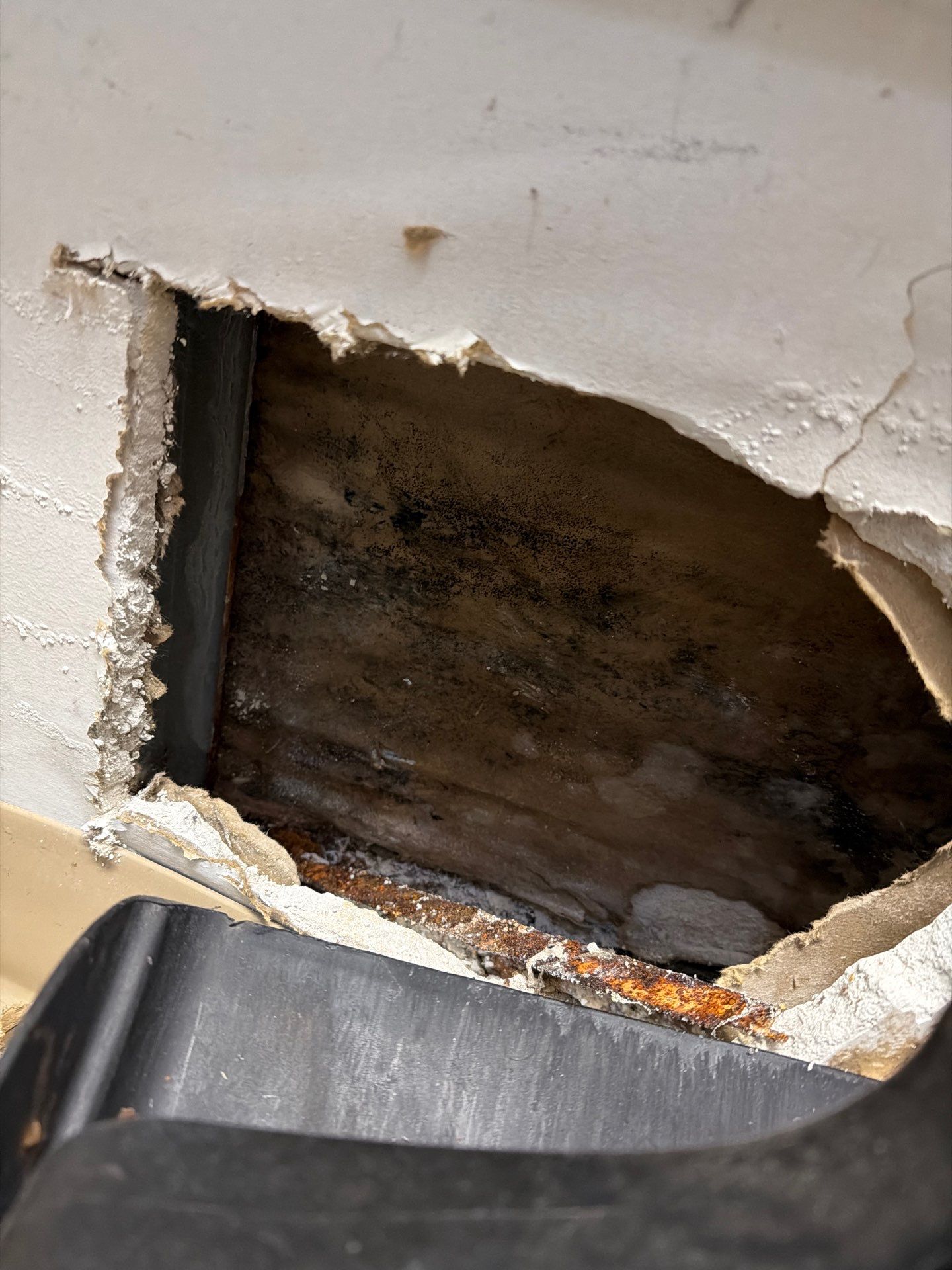
1. Confirm You Actually Have Attic Water Damage
Before you call anyone, verify the source. Roof leaks behave differently than plumbing leaks, and the fix is not the same.
- Brown or yellow ceiling stains that grow after rain
- Sagging drywall or bubbling paint on upper floors
- Damp, matted insulation when you peek into the attic
- Musty smell concentrated near roof valleys or chimneys
- Visible daylight through roof decking from inside the attic
- Granules from asphalt shingles in your gutters or downspouts
If you see two or more of these in Spencer, assume active intrusion until proven otherwise.
2. Take These Steps in the First 60 Minutes
The first hour matters more than the next ten. Quick action keeps water out of wall cavities and limits mold growth, which starts in 24 to 48 hours.
- Kill power to any affected rooms at the breaker if water is near fixtures or outlets
- Move furniture, electronics, and stored items out of the drip zone
- Place buckets, plastic bins, or a tarp under active drips
- Poke a small hole in any bulging drywall to release trapped water into a bucket
- Photograph everything before you touch it, including the attic, ceiling, and contents
- Call a restoration company that handles both water damage restoration and roof-related intrusions
10. Documentation That Strengthens Your Insurance Claim
Adjusters approve faster when the file is clean. Build it as you go, not after the fact.
- Date-stamped photos of the ceiling stain, attic, and roof exterior from multiple angles
- A short video walkthrough narrating what you see and when you noticed it
- Receipts for any emergency supplies like tarps, buckets, or fans
- Roofer invoice or inspection report identifying the failure point
- Weather records for the storm date, easy to pull from public NOAA archives
- Inventory list of damaged personal items with replacement cost estimates
Keep originals and send copies. Never hand over your only set of photos to anyone.
12. How Spencer Water Restoration Approaches Your Attic
- Free on-site inspection in Spencer and surrounding areas, usually within 60 to 90 minutes of your call
- Written scope before work begins, no surprise charges
- Direct insurance billing and adjuster coordination
- IICRC-certified technicians using calibrated moisture meters, not guesswork
- Daily progress photos sent to you and your adjuster
- Workmanship warranty on all repairs
8. Red Flags That Mean Call Now, Not Tomorrow
- Water actively dripping during or after a storm
- Ceiling sagging more than half an inch
- Visible mold on rafters or decking
- Standing water in the attic over insulation
- Electrical buzzing or flickering lights in affected rooms
- Recent storm damage with missing shingles or hail impact
7. Realistic Cost Ranges for Spencer Homeowners
Numbers vary by square footage, category, and how long the leak ran. These ranges reflect typical central Indiana jobs.
- Minor leak, small stain, dry insulation: $500 to $1,500
- Moderate Category 1 leak, partial insulation removal: $2,000 to $5,000
- Category 2 with ceiling collapse and mold: $5,000 to $12,000
- Category 3, long-term leak, structural rot: $12,000 to $25,000 or more
- Emergency tarping only: $300 to $900 depending on roof pitch and size
Most homeowner policies cover sudden and accidental roof leaks. Long-term leaks from deferred maintenance are usually excluded. We help document the timeline either way.
3. Understand What Is Actually Wet in Your Attic
Restoration crews think in layers. Each layer dries at a different rate and carries different repair costs.
- Roof decking: Plywood or OSB sheathing. Swells and delaminates when saturated.
- Insulation: Blown-in cellulose holds water like a sponge and must be removed. Fiberglass batts can sometimes be dried and reused.
- Framing: Trusses and rafters. Solid lumber tolerates short wetting but rots if saturated for weeks.
- Ceiling drywall: The backside soaks up moisture before the front shows stains.
- Ductwork and wiring: Often hidden under insulation and easy to overlook.
Drying times also depend on attic ventilation and outdoor humidity. A poorly vented attic in summer can hold moisture for weeks even after the leak is patched. That hidden saturation is what causes secondary damage like nail pops, warped trusses, and stained ceilings that reappear months later.
4. Know the IICRC Water Category
Insurance adjusters speak this language, and so should you.
- Category 1 (clean water): Fresh rainwater leak, no contamination. Cheapest to restore.
- Category 2 (gray water): Rain that has passed through contaminated insulation, rodent droppings, or old construction debris. Most attic leaks in older Spencer homes fall here.
- Category 3 (black water): Long-standing leaks with active mold colonies or sewage contact. Requires containment and full removal.
If your leak has been active longer than 72 hours, expect a Category 2 or 3 classification. That changes the scope and the price.
9. What You Can Handle vs. What Needs a Pro
Honest breakdown so you do not overpay or underreact.
- DIY okay: Small ceiling stain, dry attic, leak already fixed by roofer, single-room impact
- Pro required: Wet insulation across multiple bays, drywall sagging, musty smell, leak running over 24 hours, any visible mold
- Insurance worth filing: Damage above your deductible plus $500, sudden cause, documented with photos
6. What Professional Restoration Includes
A real restoration job is not just "dry it out and patch the ceiling." Here is what a complete scope looks like at Spencer Water Restoration.
- Moisture mapping with thermal imaging and pin meters across the attic and ceiling
- Tarping or emergency roof patch to stop active intrusion
- Removal of saturated insulation, bagged and disposed of per local code
- Controlled demolition of unsalvageable drywall, typically 2 to 4 feet around the wet zone
- Air movers and commercial dehumidifiers running 3 to 5 days
- Antimicrobial treatment on framing and decking to prevent mold after water damage
- Daily moisture readings until materials hit dry standard (usually 12 to 16 percent for wood)
- Reinsulation, drywall replacement, paint, and texture matching
5. Common Roof Failure Points That Cause Attic Leaks
Knowing where roofs fail helps you describe the problem to your roofer and your restoration crew. Most attic leaks trace back to one of these spots.
- Flashing around chimneys: Sealant cracks within 5 to 10 years and lets water track down the brick
- Plumbing vent boots: Rubber gaskets dry rot and split, dumping water directly onto the decking
- Roof valleys: Where two slopes meet, debris collects and forces water sideways under shingles
- Ice dams: Common in Spencer winters when attic heat melts snow that refreezes at the eaves
- Missing or lifted shingles: Often the aftermath of high wind events or hail
- Skylight perimeters: Factory seals fail and the curb flashing pulls loose over time
- Satellite dish or solar mounts: Penetrations that were never properly sealed
11. Preventing the Next Attic Leak
Once the repair is done, a few habits keep you out of this mess again.
- Schedule a roof inspection every 2 years, every year after age 15
- Clean gutters twice annually, more if you have overhanging trees
- Check attic insulation depth and look for daylight or staining each fall
- Reseal plumbing vent boots and chimney flashing on a 5-year cycle
- Add or upgrade attic ventilation if your roof deck shows condensation in winter
- Trim branches that scrape shingles or drop debris into valleys